Backyards in Australia aren’t just add-ons to the home anymore. Today, the outdoor living area is an integral part of daily life, providing a space for dining, entertaining, lounging and play. In 2026, the continued popularity of remote and hybrid work has made Australians feel more connected to their homes than ever. As a result, this year’s backyard design trends blend much-needed function with aesthetic appeal. From blade fencing that offers unrivalled privacy to native plants that thrive in Australia’s diverse climate, this article will cover the eight key backyard design trends shaping Australian homes in 2026.
1. Seamless Indoor-Outdoor Flow
Australian homeowners are blessed to live in one of the most beautiful countries in the world, and this 2026 trend reflects a desire to blur the line between the home’s interior and the great outdoors. With large glass sliding doors, homeowners can open living rooms and kitchens directly into the backyard, making moving between spaces totally effortless. You can create visual continuity between inside and out by using similar colour palettes and materials, such as using a dark, sealed concrete that leads from the kitchen to the patio. Ensuring level transitions is key to creating an uninterrupted flow between spaces.
2. Minimalist Boundaries and Clean Sightlines
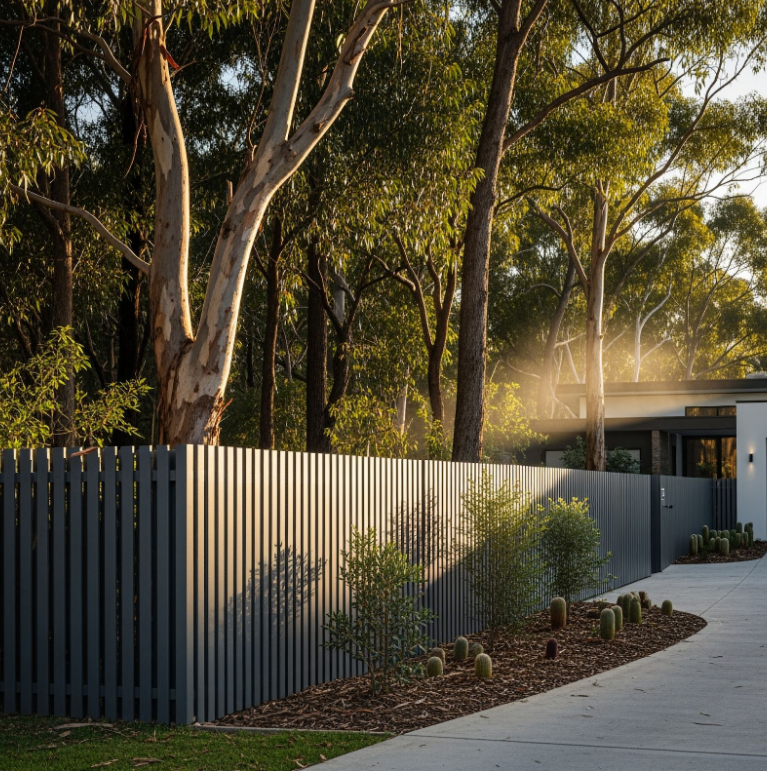
Boundaries like fences have long been used to create a sense of privacy in the backyard, but in 2026, fencing is being treated as both an architectural element and a functional structure in equal measure. There’s been a notable shift away from bulky, ornamental fencing and toward minimalist options like aluminium blade fencing that preserve light, maintain peace, frame landscaping and complement the home’s exterior. These modern fencing solutions create cleaner sightlines, making backyards feel expansive without sacrificing privacy.
3. Low-Maintenance Materials
Due to the constant demands of daily life, many Australians find free time harder to come by. No one wants to spend their precious moments maintaining their backyard. Choosing practical, durable, weather-resistant materials can give homeowners peace of mind. Solutions like Trex composite decking are designed for longevity and ease of care. They’re resistant to fading, warping, splintering and pest infestations. These materials save time and money in the long run, making backyard upkeep less stressful and more enjoyable for homeowners designing a backyard in 2026.
4. Purposeful Backyard Zones
Modern backyards are divided into clear zones for dining, lounging, gardening, entertaining and playing. Each zone supports a different activity, defined through subtle design cues such as changes in materials or furniture. Zones should be intuitive, with tool sheds placed farthest from the home and dining areas placed closest to the home. This design trend will last far beyond 2026, as it allows homeowners to tailor their outdoor spaces to their lifestyles, whether they’re social butterflies who love hosting guests, retirees who hope to optimise relaxation or new parents who want to create a safe play area for children.
5. Native and Climate-Appropriate Landscaping
As sustainability becomes a hotter topic every year, climate-appropriate plants have joined the ranks of 2026’s hottest backyard design trends. Gone are the days of high-maintenance foreign plants. Native plants, which thrive in local conditions, require less water and ongoing maintenance than their non-native counterparts. They support local biodiversity and are excellent for Australia’s essential pollinators. This trend reflects a growing awareness of environmental responsibility, but also celebrates Australia’s local identity and natural beauty. Australian plants are vibrant and diverse, including striking flowers like waratah, kangaroo paw, banksias, wattles and bottlebrush.
6. Backyard Spaces for Entertaining
Socialising with friends and loved ones continues to shape Australian backyard design. Outdoor spaces can be designed to accommodate casual, intimate gatherings or large social events, with features such as built-in seating, outdoor kitchens, dining furniture, fire pits, and weather protection to make entertaining comfortable year-round. Many homeowners opt for flexible layouts and multi-purpose furniture, like modular sectional sofas, to adapt to different occasions.
7. Smart Lighting for After-Dark Ambience
Once summer ends and daylight hours shorten, smart lighting will play a crucial role in extending homeowners’ time in the backyard this year. Layered lighting can completely transform a backyard at night. Pathway lights ensure safe navigation, feature lighting highlights a yard’s most beautiful architectural or landscaping elements, and soft, ambient lighting makes entertaining areas feel cosier and more welcoming. In 2026, choosing energy-efficient smart systems is a no-brainer, as they allow homeowners to enhance their backyard atmosphere after dark while gaining greater control over brightness, timing, mood, and energy use.
8. Wellness-Focused Backyard Retreats
Australian backyards are increasingly designed with wellness and mental well-being in mind. Homeowners are carving out calm, restorative zones dedicated to relaxation, mindfulness and gentle movement. Features like shaded yoga decks, plunge pools, outdoor baths and quiet seating nooks surrounded by greenery are becoming more common. Natural textures, soft landscaping, water features and privacy screening help reduce noise and visual distractions, creating a sense of escape without leaving home. This trend of bringing wellness to the backyard reflects a broader shift towards prioritising health, balance and stress reduction, turning the backyard into a personal sanctuary rather than just a social space.
Key Takeaways
In 2026, backyard design is all about creating a space that’s as beautiful as it is usable. Homeowners should view their backyard as an extension of their home meant to complement their lifestyle. Here’s how:
- Create a seamless flow between indoor and outdoor areas with large glass sliding doors, continued colour palettes, similar materials and level transitions.
- Choose minimalist boundaries, such as blade fencing, that offer both privacy and clean sightlines.
- Opt for low-maintenance materials like Trex composite decking, designed for longevity and ease of care.
- Create purposeful backyard zones with subtly designed cues that separate dining, entertaining, and playing areas.
- Plant native and climate-appropriate landscaping that provides a vibrant appearance while thriving and supporting the local environment.
- Design backyard spaces for entertaining large groups and hosting intimate gatherings.
- Install smart lighting for after-dark ambience, safety and beauty.
- Incorporate wellness-focused backyard retreats with calming zones for relaxation, mindfulness and gentle movement.